Brachialis-SMR
Level
intermediate
Force
static
Mechanic
isolation
Equipment
foam roll Category
stretching Primary Muscles
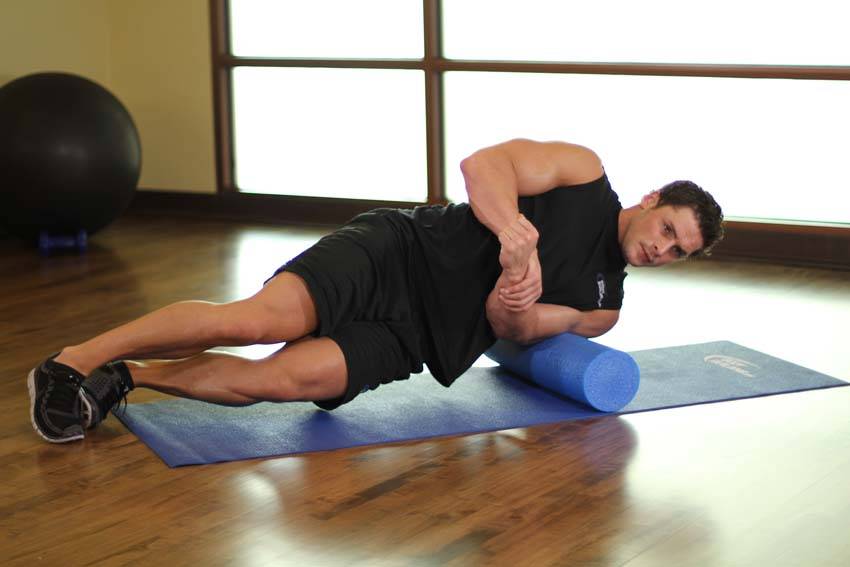
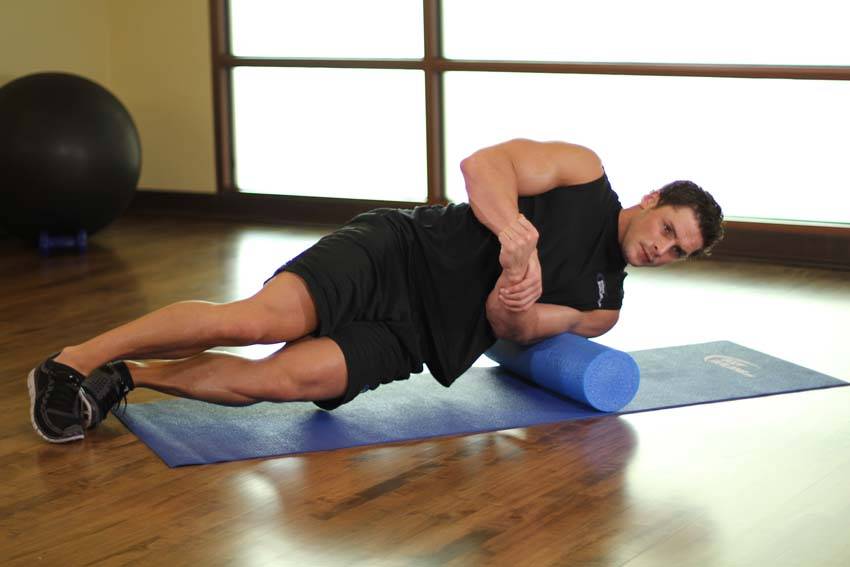
A self-myofascial release technique using a foam roller to mobilize the brachialis and biceps muscles, improving muscle quality and reducing muscle tension.
Instructions
- Lie on your side with your upper arm against a foam roller, positioned perpendicular to your body.
- Place the foam roller on the outside of your bicep/brachialis area, approximately at mid-arm level.
- Support your upper body weight on your elbow and forearm, raising your hips off the floor.
- Slowly roll the foam roller along the length of your bicep and brachialis muscle, from shoulder to elbow.
- Spend extra time on tender or tight areas, pausing for 10-30 seconds and taking slow, controlled breaths.
- Reposition the foam roller to cover the entire muscle, then switch sides and repeat on the other arm.
Tips
- This technique can feel uncomfortable as you release myofascial tension; this is normal and expected.
- Slow, deliberate rolling is more effective than fast movements for releasing muscle tension.
- Focus on breathing throughout the release; avoid holding your breath as this increases tension.
- Apply appropriate pressure; you can reduce pressure by supporting more weight on your legs.
- Perform this technique 2-3 times per week for best results in improving muscle mobility.
- Combine with static stretching for comprehensive upper arm mobility work.
Recommended starting values
Sensible novice starting points for each goal, for a lifter aged 25–40. Scale down for smaller frames or older lifters. Treat the first set of any session as a discovery set.
| Goal | Sets | Hold |
|---|---|---|
| Gain strength | 3 | 25 s |
| Build muscle | 3 | 40 s |
| Build endurance | 3 | 1 min |
Alternatives
Exercises that target the same muscles with the same force and mechanic.
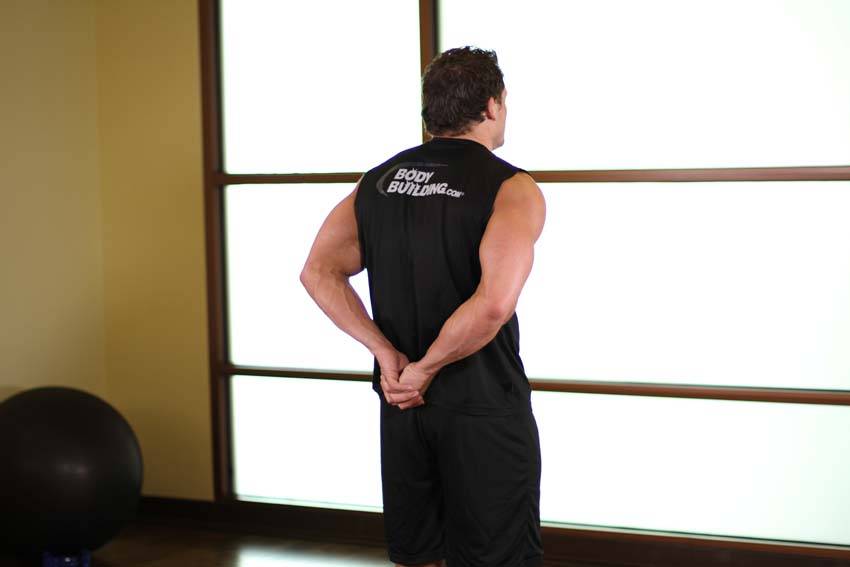
beginner stretching