Rowing, Stationary
Level
intermediate
Mechanic
compound
Equipment
rowing machine Category
cardio Primary Muscles
Secondary Muscles
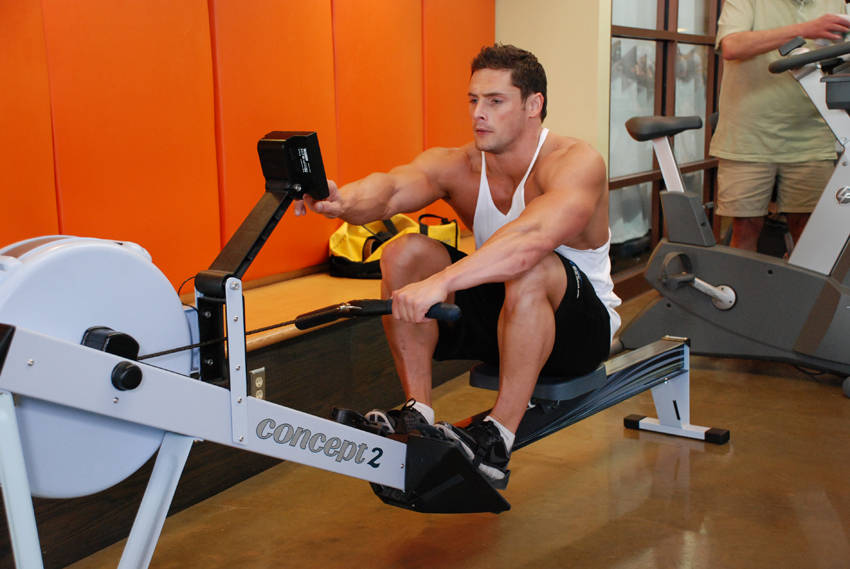
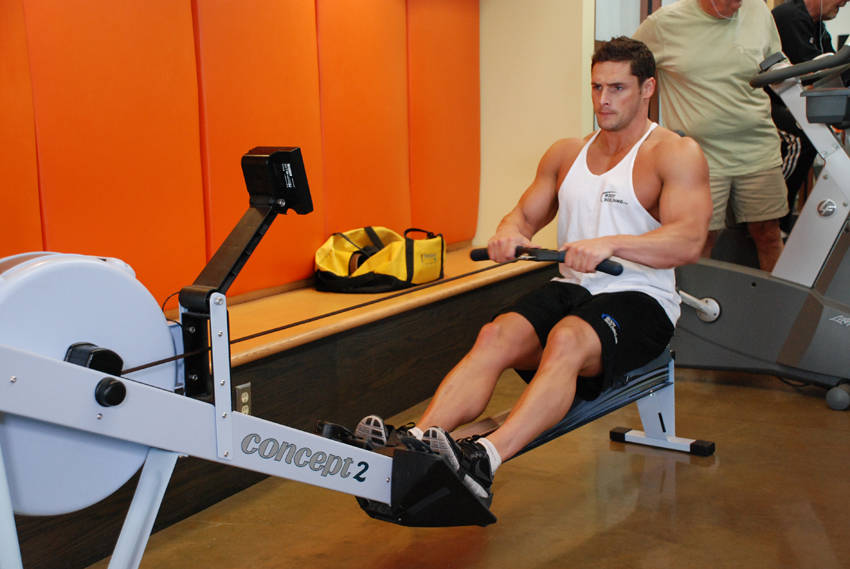
Stationary rowing is a low-impact cardiovascular exercise that engages the entire body while improving both aerobic fitness and muscular endurance. The rowing machine burns significant calories while developing back and leg strength.
Instructions
- Seat yourself on the rower and ensure your heels rest comfortably against the foot pedals.
- Secure the foot straps to prevent your feet from slipping during the movement.
- Select your desired program or set the rower to manual mode.
- Sit up straight and bend forward at the hips, reaching for the handle.
- Begin by driving through your legs while extending them fully, then bring your hands toward your upper abdominal area.
- Squeeze your shoulders back and drive through the full range of motion.
- For the recovery phase, straighten your arms, bend your knees, and bring your body forward again.
- Repeat the sequence for your desired duration or distance.
Tips
- The rower works your entire body, including legs, lats, abdominals, and arms.
- Proper sequencing is critical: drive with legs first, then engage the back, finally using arms.
- To avoid straining your back, primarily use your leg and hip muscles for power.
- Start with lower damper settings if you’re new to rowing to master the movement pattern.
- Maintain steady breathing throughout your session.
- Rowing is low-impact and excellent for cardiovascular conditioning and recovery days.
- A 150 lb person burns significant calories with consistent rowing sessions.
Recommended starting values
Sensible novice starting points for each goal, for a lifter aged 25–40. Scale down for smaller frames or older lifters. Treat the first set of any session as a discovery set.
| Goal | Sets | Distance |
|---|---|---|
| Gain strength | 3 | 300 m |
| Build muscle | 3 | 700 m |
| Build endurance | 3 | 1.3 km |